Showing posts with label Northwestern Nevada. Show all posts

Why Consulting a Valve Expert Is Essential for Process Control Success

Why Consulting a Valve Expert Is Essential for Process Control Success

Designing process control systems that require industrial control valves demands a high level of expertise and precision. Industrial control valves play a pivotal role in regulating flow, pressure, temperature, and fluid levels within various industrial processes. Any misstep in their selection or implementation can lead to inefficient operations, safety hazards, and increased costs. Therefore, consulting with an experienced process control valve expert becomes not just beneficial but critical in ensuring the success and safety of these systems.

Industrial control valves come in an array of types, materials, sizes, and specifications. Each valve must meet the specific demands of the process conditions it will encounter, such as temperature extremes, corrosive substances, or high-pressure environments. An experienced valve expert possesses in-depth knowledge of these variables and understands how they interact within a complex system. They can navigate the intricate details a general engineer might overlook, ensuring that the selected valves align perfectly with the system's requirements.

Moreover, valve experts stay abreast of the latest technological advancements and industry standards. They bring insights into new materials, designs, and control technologies that can enhance system performance. By leveraging their expertise, they can recommend valves that meet current needs and offer scalability and adaptability for future process changes. This forward-thinking approach can save time and resources in the long run, preventing the need for costly overhauls or replacements down the line.

The financial implications of improper valve selection or implementation are significant. Incorrect valves can lead to leaks, equipment damage, or system failures, resulting in unplanned downtime and repair costs. An experienced valve expert can mitigate these risks by ensuring that every valve is suited to its specific function and environment. They can conduct thorough assessments and simulations to predict how valves will perform under various conditions, thereby preventing potential issues before they arise.

Safety is another paramount concern in industrial processes. Valves not appropriately selected or maintained can pose serious safety risks, including explosions, fires, or exposure to hazardous substances. Valve experts understand the critical safety standards and regulations that govern industrial operations. They ensure that all valves comply with these standards, providing peace of mind that the system operates safely and efficiently. Their expertise can also contribute to a safer work environment by reducing the likelihood of accidents caused by valve failures.

In addition, collaborating with a valve expert fosters better communication and understanding among the engineering team. These experts can bridge gaps between disciplines, ensuring that mechanical, electrical, and control systems work harmoniously. They can provide valuable training and support to the team, enhancing overall competency and confidence in managing the control system.

Time efficiency is yet another benefit of involving a valve expert. Designing and implementing control systems is a time-sensitive endeavor, and any delays can have cascading effects on project timelines and budgets. Valve experts streamline the selection and implementation process, making informed decisions quickly and accurately. Their experience allows them to anticipate and address challenges proactively, keeping the project on schedule.

The complexity and critical nature of industrial control valves necessitate the involvement of an experienced process control valve expert in the design of process control systems. Their specialized knowledge ensures optimal valve selection, enhances system performance, reduces financial risks, and upholds safety standards. Engineers and project managers can achieve a more efficient, reliable, and safe control system by consulting with these experts. It is an investment that pays dividends in operational excellence and peace of mind, underscoring the indispensable role that valve experts play in industrial process control.

CTi Controltech
https://cti-ct.com
925-208-4250

Optimizing Manufacturing Processes Through Expert Sales Engineers

Optimizing Manufacturing Processes Through Expert Sales Engineers

Industrial process control instrumentation and valves are essential for maintaining the efficiency, safety, and smooth operation of various manufacturing processes. Experienced industrial Sales Engineers play a critical role in this context, bringing unique and indispensable benefits to specifying, selecting, and applying these vital components.

Sales Engineers possess comprehensive knowledge of the latest technologies, product offerings, and industry best practices. Through extensive training and hands-on experience, they provide valuable insights and tailored recommendations for specific applications. Their expertise enables engineers and project managers to make informed decisions, ensuring the selection of the most suitable and cost-effective components for their projects.

More than just intermediaries, Sales Engineers proactively delve into understanding customer needs, challenges, and objectives. They don't just listen, they act. They translate these insights into actionable solutions, guiding customers through the complexities of industrial instrumentation and valves. This close collaboration helps optimize processes, enhance efficiency, and achieve desired outcomes by offering product specifications, compatibility, and system integration advice.

Sales Engineers support projects throughout their lifecycle, from initial design and specification to technical support and troubleshooting. They assist in instrument and valve sizing, material selection, and performance evaluation, ensuring seamless integration with other system components. Their commitment to customer success often extends to ongoing support and after-sales service.

Effective communication and coordination among various stakeholders are not just facilitated, but championed by Sales Engineers, who act as central points of contact in industrial projects. They bridge the gap between technical and non-technical stakeholders, fostering collaboration and ensuring alignment toward common goals. By translating complex concepts into understandable terms, they enable productive discussions and smooth project execution.

Sales Engineers stay updated on industry standards, regulations, and compliance requirements, guiding the selection of instrumentation and valves that meet stringent safety, environmental, and performance standards. This proactive approach helps avoid costly rework, delays, and potential legal issues, ensuring that projects adhere to necessary standards and best practices.

The partnership with Sales Engineers is not just a transaction, it's a journey that often leads to long-term benefits and strategic alliances. As trusted advisors, they gain a deep understanding of their customers' businesses, processes, and future goals. This knowledge enables them to identify opportunities for improvement, propose innovative solutions, and align offerings with evolving needs. Strong relationships built on trust and mutual success make Sales Engineers valuable assets, contributing to the overall growth and competitiveness of their customers' operations.

In summary, industrial Sales Engineers' involvement in specifying, selecting, and applying process control instrumentation and valves is highly beneficial. Their technical expertise, industry knowledge, and commitment to customer success make them invaluable partners in optimizing processes, improving efficiency, and achieving project objectives. By leveraging the skills and support of Sales Engineers, engineers, and project managers can confidently navigate the complexities of industrial instrumentation and valves, ultimately driving the success of their projects and organizations.

CTi Controltech
https://cti-ct.com
925-208-4250

Spring-Loaded and Pilot-Operated Safety Valves and Their Industrial Uses

Spring-Loaded and Pilot-Operated Safety Valves and Their Industrial Uses

Here's a detailed explanation of spring-loaded and pilot-operated safety valves and their industrial uses.

Spring-Loaded Safety Valves

  • Description: These safety valves feature a simple, self-contained design consisting of a valve body, a valve seat, a disc (or poppet), a spring, and an adjustment screw. The spring actively exerts a force on the disc, keeping it pressed against the valve seat and the valve closed under normal operating conditions. You can adjust the spring tension using the adjustment screw, enabling customization of the set pressure of the valve.
  • Operation: When the system pressure exceeds the set pressure, the pressure forces the disc away from the valve seat by overpowering the spring force, opening the valve, and allowing excess pressure to vent out. Once the system pressure drops below the set pressure, the spring forces the disc back onto the seat, closing the valve.
  • Applications: Industries use spring-loaded safety valves in various applications such as boilers, pressure vessels, and different piping systems, especially where the fluid is gas or steam. These valves respond quickly to sudden increases in pressure.
  • Advantages: Spring-loaded safety valves are self-contained, straightforward, and reliable. They operate without the need for any external control or power supply.
  • Disadvantages: These valves have limited capacity, might not handle extreme pressure fluctuations effectively, and can suffer from issues like "chattering" (rapid opening and closing), which can damage the valve.

Pilot-Operated Safety Valves

  • Description: Pilot-operated safety valves are more intricate than spring-loaded valves. They comprise two main components: a main valve and a pilot valve. System pressure and a smaller spring close the main valve, acting on a larger surface area. The pilot valve, essentially a small spring-loaded safety valve, controls the opening and closing of the main valve.
  • Operation: When system pressure surpasses the set pressure, the pilot valve opens first, reducing the pressure on top of the main valve. This action opens the main valve, venting the excess pressure. As the system pressure drops below the set pressure, the pilot valve closes, and the main valve reseals.
  • Applications: Industries commonly use these valves in high-capacity and high-pressure applications such as chemical processing plants, power plants, and oil and gas facilities. They are ideal for liquid-based applications because they can handle large pressure fluctuations and higher flow capacity.
  • Advantages: Pilot-operated safety valves offer greater capacity, improved performance with liquids, and increased stability compared to spring-loaded valves. They can accommodate more significant pressure fluctuations and are less susceptible to chattering.
  • Disadvantages: These valves are more complex and costly compared to spring-loaded valves. They might also need periodic maintenance to ensure proper functioning.
Both types of safety valves play a crucial role in maintaining safe operating conditions in industrial systems. They prevent equipment damage and protect workers from potentially dangerous situations. The choice between spring-loaded and pilot-operated safety valves depends on the application's specific needs, such as the fluid type, operating pressure, and flow capacity.

CTi Controltech
925-208-4250

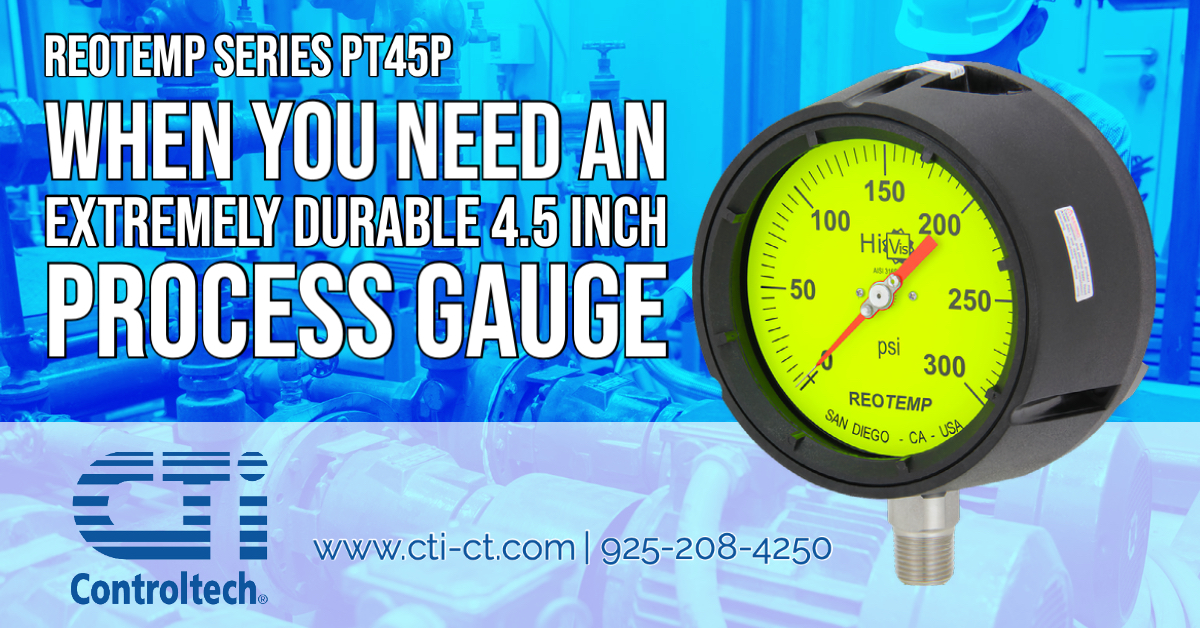
When You Need an Extremely Durable 4.5 Inch Process Gauge

When You Need an Extremely Durable 4.5 Inch Process Gauge

The Series PT45P process gauge from REOTEMP is an exceptionally durable gauge that can withstand pulsation and vibration, as well as corrosive atmospheres and media. It was built specifically for use in the process industries. The combination of the solid front and the blowout back provides a very high level of user safety. Note: A diaphragm seal should be installed for any highly corrosive application, operates at high temperatures, or put through strenuous use.

For more information about REOTEMP products in Northern California and Northwestern Nevada, contact CTi Controltech by calling 925-208-4250 or visit https://cti-ct.com.

Control Valve Application Notes

Control Valve Application Notes

Using an incorrectly applied or sized control valve may have significant ramifications for operation, productivity, and, most importantly, safety. Here is a brief list of fundamentals to consider: 

Control valves are not isolation valves: 

Control valves do not isolate a process and do not offer a bubble-tight seal, and utilization in a shutoff capacity is unwise. 

Choose the suitable materials for the job: 

The valve body, seat, and wetted materials must all be compatible with the process under control. Before selecting a valve, evaluate the pressure ratings, operating temperatures, and material compatibility. 

Sensor placement: 

Place the flow sensor upstream of the control valve when configuring the control loop. When the flow sensor placement is downstream of the control valve, exposure to an unstable fluid (bubbles) created by the flashing and turbulence of the flow in the valve cavity is possible.

Control precision and mechanical constraints: 

Consider the degree of controllability you need and the inherent Deadband produced by your valve and associated components. Deadband is the built-in movement that occurs in a control valve between the signal change and the direction of the valve, which exacerbates by worn or poorly designed couplings between valve and actuator, mechanical sensor tolerances, friction in the valve stems and seats, or an undersized actuator. Due to opening/closing oscillations, too much deadband leads to poor controllability (hunting). 

Stiction: 

Stiction is the "stickiness" in valve action induced by packing gland, seat, or force against the disk friction. It may happen if the valve sticks in one position for a prolonged time or is constantly traveling in a minimal range for an extended period. The actuator must apply more force to break the disk free, resulting in overshoot and poor control. 

Tuning the loop controller and/or positioner: 

A poorly configured loop controller or positioner is often the source of poor control and loop instability. Advanced auto-tuning capabilities in PI (proportional with integral), PD (proportional with derivative), and PID (proportional with integral and derivative) controllers have replaced human (often trial and error) loop tuning. 

Valve sizing should be correct: 

Control valves are often oversized, permitting maximum flow at just a tiny percentage of total travel. Minor adjustments in valve position have a significant impact on flow. A high valve-position-to-flow ratio promotes continual "hunting," which leads to excessive valve wear. A decent rule of thumb is to size a control valve at around 70% to 90% of its travel. 

What sort of flow characteristics does your valve produce: 

The flow characteristic of a control valve is the connection between the position of the valve disk, gate, or globe and the change in flow rate through the valve under normal circumstances. A linear flow characteristic is desirable. However, different valve designs have varying flow characteristics, some of which are linear and others that are not. Globe control valves have linear flow properties, while butterfly and gate valves have non-linear flow characteristics. Manufacturers will often create specifically shaped disks or orifices to "characterize" the valve's flow to improve linearity.

The above is a brief list of the most common things to consider when applying control valves. There are many other criteria to consider. It is suggested in the strongest terms to consult with an experienced application expert before selecting or using a control valve.

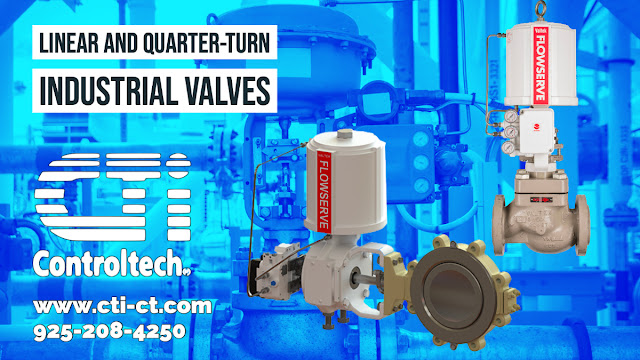
Linear and Quarter-turn Industrial Valves

Linear and Quarter-turn Industrial Valves

Various valves are designed and used for multiple roles in process control. Linear and quarter-turn valves are two types of valves used to regulate and control fluid flow in the industry. Their design and construction reflect the intended use of the valves, with each suited to a different class of service. 

All valves work by controlling the position of an internal structure that obstructs fluid passage to some extent. In general, fluid flow at the valve classifies as unrestricted (valve fully open), stopped (valve fully closed), or throttled (valve partially open). The operational requirements of the process will determine whether only two of those conditions (fully open and fully closed) or all three are required. When choosing an appropriate valve, the fluid, the process, and the surrounding environment must be considered. It is not always a simple task. 

Linear valves distinguish themselves using straight-line motion to position the valve plug, disc, diaphragm, or other flow controlling elements. The linear valve trim's shape, size, and arrangement provide the operator with a flow range through the valve. The linear valve's positioning allows it to regulate fluid flow slower but more accurately. Linear motion valves include gate and fixed cone valves—linear valves best suit flow control.

Quarter turn valves move from fully open to closed by rotating a shaft connected to the controlling element 90 degrees. Their relatively simple operation allows for a rugged and compact design. The ability of quarter-turn valves to quickly reposition from open to closed positions is one of their distinguishing features. The torque required to operate the valves is typically low to moderate. Quarter turn valves include ball and butterfly valves. 

Depending on the situation, linear valves and quarter-turn valves are the best choices for specific process environments. The linear valve's accuracy and ability to move in a linear fashion rather than a quarter-turn come with easy maintenance and a lower likelihood of cavitation. Both valve types are widely used and are not competing for the same application. Each excels in a specific set of applications.

https://cti-ct.com
925-208-4250

Alfa Laval's Unique Mixproof 3-Body Sanitary Valve

Alfa Laval's unique Mixproof 3-Body valves allow for the simultaneous flow of two different products or fluids through the same valve without the risk of cross-contamination. The valve also includes a changeover function. 

The Mixproof 3-Body valve offers optimal process flow, exceptional hygiene, maximum uptime, and a low total cost of ownership. Its modular, three-valve-body design ensures reliable fluid handling and safety, making it ideal for use as a hygienic changeover valve. The Mixproof 3-Body valve translates into significant cost savings and increased efficiency.

FEATURES:

  • Operating spillage-free
  • Simplified maintenance
  • High level of hygiene
  • Outstanding safety level
  • Based on proven platform

Alfa Laval manufactures sanitary valves and automation. Customers trust Alfa Laval valves in the food, biopharma, life science, pharmaceutical, and cosmetic industries for process performance and hygiene in the most demanding applications.

For more information about Alfa Laval valve products in Northern California and Northwestern Nevada, contact CTi Controltech by calling 925-208-4250 or visit https://cti-ct.com.

CTi Controltech Is Now an Alfa Laval Valve Distributor

CTi Controltech Is Now an Alfa Laval Valve Distributor

CTi is now distributing Alfa Laval valve products in Northern Califonia and Western Nevada. 

Alfa Laval manufacturers valves and automation for hygienic use. Customers in the food, biopharm, life science, pharmaceutical, and cosmetic industries rely on Alfa Laval valves for process performance and hygiene in the most demanding applications.

Products distributed include:
  • Ball valves
  • Butterfly valves
  • Control/check valves
  • Diaphragm valves
  • Double seal valves
  • Double seat valves
  • Regulating valves
  • Safety valves
  • Sample valves
  • Shutter valves
  • Single seat valves
For more information contact CTi Controltech by calling 925-208-4250 or visit https://cti-ct.com.

The Advanced Technology Behind Air Monitor Flow Measurement Products

Air Monitor Flow Measurement Products

Air Monitor products are used for measuring clean airflow, dirty airflow, and combustion airflow in refineries, foundries, aerospace, power, electronics manufacturing, food & beverage, pharmaceutical, automotive, chemical, wastewater, pulp & paper, and environmental industries. Air Monitor uses multi point averaging pitot tube technology coupled with ultra low, high accuracy, differential pressure measurement to measure air flow in any industrial environment.

Pitot Averaging Technology


The Air Monitor multi-point self-averaging pitot averaging technology is unique in that it is a pure instrument measuring true velocity pressure (total pressure – true static pressure). Other technologies measure a reference pressure on the back or side of the probe resulting in a DP that is not true velocity pressure as derived from Bernoulli’s Equation. This reference pressure requires the use of correction factors that vary with Reynolds number (i.e. velocity and density changes) in order to relate the measured DP to true velocity pressure. The Air Monitor system also utilizes the Fechheimer method of true static pressure measurement along with a chamfered impact or total pressure measurement to provide an accurate velocity pressure measurement and do so with pitch and yaw angles up to ± 30 degrees without requiring additional corrections.

Differential Pressure Technology


Differential Pressure technology is commonly used to measure fluid velocity due to their well-defined relationship. The square root of the differential pressure is proportional to the velocity of the fluid. In ducted systems the total pressure consists of the velocity pressure and static pressure. By measuring the total and static pressures in a duct, the velocity pressure can be obtained by subtracting static pressure from total pressure. This is achieved in practice by directly measuring the differential pressure between the two.

Air flow measurement over a large velocity range requires an extensive selection of DP transducers with multiple upper range limits (URLs) to fit the required application - from ultra low range like 0.05” w.c. URL transducer and higher. Air monitor offers this ultra low range DP sensing capability coupled with the Auto-zero function to provide a highly accurate DP measurement with long term calibration stability starting for 0.05” w.c. URL transmitters.

For more information in Northern California and Northwestern Nevada, contact CTi Controltech by calling 925-208-4250 of visit their web site at https://cti-ct.com.

Thermal Mass Flow Meters

Thermal Mass Flow Meters

Thermal mass flow meters measure flow by introducing heat into a flow stream and measuring the dissipation of heat between temperature measurement points. They are very popular because they provide a fairly unrestricted flow path, have no moving parts, are accurate over a wide range of flow rates, work well on large or small pipes, don’t require temperature or pressure compensation, and actually calculate mass flow rather than volume. In most cases, thermal flow meters are used to measure and monitor flowing gases, but in some cases they are used to measure the flow of liquids.

Fox Thermal Instruments, located in Marina, CA, manufacturers some of the most innovative and reliable thermal mass flow meters today. Their products are used in a wide variety of industrial gas flow and emissions monitoring applications.

Fox Thermal provides basic models:

Model FT1:

Winner of the 2015 Flow Control Innovation Awards, is the newest Thermal Gas Mass Flow Meter offered from Fox Thermal Instruments.  The Model FT1 was nominated for this award because of its innovative design elements such as the DDC-Sensor™ technology platform that allows it to operate using the Gas-SelectX® gas menu selection tool.

Model FT2A:

The Model FT2A continues to accurately measure gas flow rate in standard units without the need for temperature and pressure compensation. Some additional features available on the FT2A include a standard display, a standard USB port to connect to a PC, and the option of BACnet MS/TP communication protocol.

Model FT3:

The Model FT3 measures gas flow rate in standard units without the need for temperature and pressure compensation.  Calibration Validation, using the CAL-V™ and Zero CAL-CHECK® features, is an in-situ calibration routine that validates the flow meter’s accuracy by testing the functionality of the sensor and it associated signal processing circuitry.

Model FT4A

The Fox Thermal Model FT4A was the first meter to use the expanded Gas-SelectX® gas selection menu and the 3rd Generation DDC-Sensor™ design. The Gas-SelectX® gas menu feature for the Model FT4A flowmeter. Gas-SelectX® allows the user to choose from a menu of several common gases or gas mixtures for their application.

Model FT4X

The Fox Thermal Model FT4X comes equipped with an advanced intrinsic Data Logger for advanced record-keeping and data retention. Data logging is commonly used in applications such as flare and waste gas monitoring, gas studies, gas royalties and allocation, and gas flow research.

For more information about thermal mass flow meters, contact CTi Controltech. They can be reached by calling (816) 353-6550 or by visiting their web site at https://cti-ct.com.

PBM Industrial Valve Solutions

PBM is a leading producer of dependable, high quality valves for the Chemical & Paint, Food & Beverage, Marine, NQA-1 Qualified, Pharmaceutical, Energy, Paint & Resin, Pulp & Paper, Cryogenic, Personal Care, and Steel industries.

This catalog contains comprehensive information on the following PBM products:
Download the PBM Industrial Valve Catalog from Here
  • SP, SD Series 5; SP Series 6
  • SP, SD Series 5; SP SERIES 6 Actuated
  • AN Series 5, 6 150 & CL300
  • AN Series 5, 6 Actuated
  • AN Series 1 CL150
  • AN Series 1 Actuated
  • FT, FD Series 5; FT Series 6
  • FT, FD Series 5; FT Series 6 Actuated
  • AF Series 1 & 3
  • AF Series 1 & 3 Actuated
  • DP, DD Series 5
  • DP, DD Series 5 Actuated
  • MP Series 5
  • MP Series 5 Actuated
  • MP Series 4
  • MP Series 4 Actuated
  • MP Series 1 Actuated
  • Instrument Valves
  • Double Block & Bleed Valves
  • Bolted Instrument Valves
  • Bolted Double Block & Bleed Valves
  • Transmitter Isolation Valves
  • Fabflex® Instrumentation Valve Manifolds
  • Flush Rings/Bleed Rings with Integral Valve
  • Sampling Tank Bottom Valves
  • Cryogenic Ball Valves

Understanding Pressure/Vacuum Relief Valves, Flame and Detonation Arresters, and Blanket Gas Regulators

Groth Equipment

PRESSURE/VACUUM RELIEF VALVES

Pressure/vacuum relief valves are protection devices typically mounted on a nozzle opening on the top of a fixed roof atmospheric storage tank. Their primary purpose is to protect a tank against rupture or implosion by allowing the tank to breathe, or vent, when pressure changes in the tank due to normal operations.

PILOT OPERATED RELIEF VALVES 

Pilot operated relief valves serve the same primary purpose as pressure/vacuum relief valves, but with better performance characteristics than weight or spring loaded valves. Lower leakage and better flow performance make a pilot operated valve the solution when the focus is product conservation, expanded tank working pressure range, and reduced fugitive emissions. A pilot operated relief valve pro-vides the maximum available leakage control technology as specified in the Clean Air Act of 1990.

EMERGENCY RELIEF VALVES 

Emergency relief valves protect tanks against excessive pressure caused by external fire exposure or flashes within the tank. Emergency relief valves provide higher flow capacity than standard pressure/vacuum relief valves.

DEFLAGRATION FLAME ARRESTERS 

Deflagration flame arresters are fire safety devices used to protect stored or process media from deflagrations. A deflagration flame arrester can be used on the top of a tank in certain conditions, as an in-line safety device where combustible gases are transported through low pressure pipe lines.

DETONATION FLAME ARRESTERS 

Detonation flame arresters provide flame protection in cases where the ignition source pipe lengths are greater than what can be protected with a deflagration arrester.

BLANKET GAS REGULATORS 

Blanket gas regulators can provide both pressure and fire protection for storage tanks by supplying a blanket- ing gas which maintains a constant positive pressure in the vapor space of a storage tank.

For more information, contact CTi Controltech. Call them at 925-208-4250 or visit their web site at https://cti-ct.com.

Adjustable Sealing Technology by PBM


Let's face it valve seats and seals wear. It's just the inherent nature of soft seated valves. Just like the brakes on your vehicle wear over time, so do valve seats and seals. But if you have a process that runs 24/7 and downtime is costly to your organization, then PBM has a product that you have been waiting for. Most of all PBM valves feature adjustable sealing technology. Adjustable sealing technology allows you to reseal the valves in the event of leakage. Similar to tightening a packing nut on a valve to stop seepage, PBM applies he same principle to their valves body bolts, which bring the seats incrementally closer to the ball to compensate for normal wear, allowing multiple adjustments over the life of valve seats and seals.

This technology works by having the ball compressed by the seats, using the force of the valve body bolts, which provides a second benefit. An upstream sealing ball valve. Where traditional ball valves rely on upstream pressure to float the ball to the seats,  PBM brings the seat to the ball. Two seats, two sealing points. True upstream and downstream sealing. Now you have two seats versus one. Upstream sealing allows the valve cavity to be completely isolated in the ball open or closed position. Have a sticky gooey process? Want to sterilize the valve cavity? Want to flush between batches? Fast and efficiently PBM has you covered. Add ball drain flats or holes, and you can get by with one purge point to the valve. Everything gets flushed through the downstream piping. If you're looking for an innovative solution to costly downtime, or need to clean internals quickly and efficiently, look at the benefits of adjustable sealing technology - a standard benefit of using PBM.

For more information, contact CTi Controltech.
925-208-4250
https://cti-ct.com

CTi Controltech Service and Support: Improving Our Customer's Safety and Profitability

CTi Controltech Service and Suppor

With engineering, design, and support resources available in Northern California and Western Nevada, CTi Controltech delivers value-added solutions that improve operations and increase profitability for our customers in the power generation, alternative energy, municipal water, wastewater treatment, gas & oil, chemical, refining, mining, agricultural, food service, pharmaceutical, and aerospace industries.

CTi Controltech offers our customers a group of services designed to provide outstanding value and cost savings throughout your equipment's life span. By integrating access to best-in-breed equipment manufacturers, decades of application experience, and state-of-the-art tools, CTi Controltech helps customers:
  • Improve plant and personnel safety
  • Optimize asset uptime and performance 
  • Lower total cost of operation and maintenance
  • Increase equipment reliability

PARTS, REPAIRS, UPGRADES AND FIELD SERVICES

CTi Controltech mobile service personnel and advanced diagnostic technologies, along with the unparalleled expertise of their technicians, is equipped to address virtually any process equipment service requirement, regardless of the manufacturer.

Repair and Upgrades — CTi Controltech repairs and/or upgrades equipment, providing new life to existing process instrumentation, valves, and control systems.

Replacement Parts and Components — Using its broad network of manufacturer's service facilities, and our own local stocking centers, CTi Controltech provides timely delivery of quality parts that keep your operations running smoothly and profitably .

Field Service Personnel — From maintenance to management, highly qualified CTi Controltech project managers, engineers and technicians will assist you in keeping your plant running smoothly .

ENGINEERING AND TECHNICAL SERVICES

Technical Analysis — CTi Controltech can perform system audits to identify operational issues that may be constraining output or elevating operating costs, and then recommended laser-focused solutions.

Reliability and Efficiency Services — CTi Controltech lends their decades of hands-on experience to offer practical solutions that improve the performance, efficiency, and reliability of your process control equipment - all while lowering your total cost of ownership.

Loop Design, Integration and Engineering Support — CTi Controltech engineers engage with our customers, providing on-site support for grassroots project planning, system design, or project management requirements.

ASSET MANAGEMENT AND OPTIMIZATION

CTi Controltech continues to invest in its capabilities and technologies to help our customers realize more payback from their plant assets.

Equipment Life Cycle Optimization — Through a combination of on-site assessments and technology, CTi experts help customers benchmark operational performance, define key metrics, and implement precise solutions to achieve long-term operational goals.

Intelligent Product Solutions — By employing an array of sophisticated products, services, and software that collects, examines and understands data, CTi Controltech helps customers use predictive analytics to take action and improve asset reliability and reduce downtime.

EDUCATION AND TRAINING

CTi Controltech offers a wide range of innovative training programs to help plant operators, managers, reliability specialists, engineers and maintenance staff further develop their understanding of critical equipment and processes.

Training at CTi — At our state-of-the-art facility in San Ramon, California, highly trained instructors provide hands-on training and instruction in the principles of process control, instrumentation maintenance, control valve operation, and equipment reliability.

Customer On-site Training — CTi Controltech will design, develop, and deliver training programs tailored specifically around the people, equipment and processes at a customer’s facility.

CTi Controltech
925-208-4250

Flowserve Valve, Actuation and Instrumentation Portfolio

Flowserve valve, actuation and instrumentation
The Flowserve valve, actuation and instrumentation portfolio includes world-class quarter-turn, rotary, linear, control and special configuration valves. Additionally, Flowserve also offers precision actuation and instrumentation for every application, from remotely controlled, fully automated electric, hydraulic and pneumatic actuators to electronic positioners and level switches . Fail-safe isolation, on-off modulation and precision process control ensure efficient and reliable operation, even in the most hazardous environments.

Flowserve valve and actuator products deliver industry-leading performance and reliability, with embedded technologies that make them easy for operators to use and maintain. By coupling their control solutions with real-time system analysis, predictive maintenance and remote service capabilities, today's manufacturing plants get end-to-end intelligence that maximizes their uptime.

View the embedded document below, or download your copy of the Flowserve Valve, Actuation and Instrumentation Portfolio here.

CTi Controltech
https://cti-ct.com
925-208-4250


Convenient Rupture Disc Selection Form from Continental Disc Corporation

CDC rupture disc
CDC rupture disc.
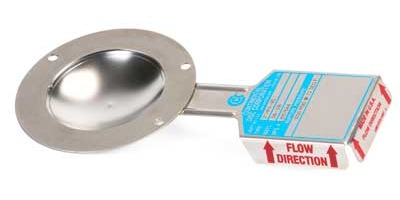
Continental Disc Corporation is a leading manufacturer of rupture disc (bursting disc) devices for a variety of process industries, including chemical, petrochemical, petroleum refining, pharmaceutical, food and beverage, aerospace, industrial gases, transportation, and other markets worldwide.

They have a very convenient online form to assist in replacement of an existing rupture disc, or to specify a new installation. The form can be found by following this link. The form gives you the option to print it from its online page, or to email the form to Continental Disc sales department for a quotation.

In 2017, CTi Controltech was appointed the exclusive Continental Disc and Groth Equipment representative in Northern California and Nevada.

Pneumatic Damper Drives Superior to Electric Drives on Boiler Dampers

Pneumatic Damper drives
Pneumatic Damper Drives (Rotork)
In flue gas and combustion air applications, rapid response is critical for optimal efficiency, safety, and equipment longevity. Pneumatic vane damper drives don't have gears or motor windings that slow down response or introduce slop. In power plants boiler applications, Rotork Type K damper drives continue to provide a better solution for critical damper applications over electric drives.

Electric Drive
Old Electric Drive
Balanced-draft power generation boilers can experience very serious equipment failures if low pressure conditions exist inside the combustion chamber. Transients in boiler pressure can cause combustion complications leading to irregular heating of steam tubes, and in extreme situations, negative boiler pressure can collapse boiler walls and buckstays. There is a possibility for catastrophic failures (ruined boiler tubes, destroyed  refractory, boiler structural damage) leading to long shutdowns, lost production, and expensive re-construction. Pneumatic damper drives are excellent alternatives to electric drives in these applications because of speed, accuracy, and reliability.

Understanding the catastrophic possibilites, it is extremely important to provide consistent internal operating pressure environment for efficient and manageable combustion. ID (induced draft) fans on combustion boilers play a critical role in maintaining reliable boiler pressure. In turn, the ID fan inlet damper control system that regulates fan induced airflow and pressure need to be accurate, responsive, and reliable to assist in keeping boiler combustion chamber pressure fluctuations in check. Pneumatic vane drives react to signal changes and produce movement instantaneously and repeatably.
Pneumatic drive
New Pneumatic Drive

Rotork Type K PM Series Pedestal-Mount Damper Drives have proven themselves time and time again as the best choice for these applications. Pneumatic vane drives deliver high torque at tested speeds of less than 3 seconds for a full 90-degree stroke. They offer drop-in-place retrofit to the existing damper drive footprint, plus smart positioner technology. The Type K Drives perform quickly and smoothly at full boiler pressure and damper load, and as required, fail to the fully closed position.

The data collected after years of maintenance-free operation, in thousands of successful installations world-wide, is compelling. Pneumatic drives are superior to electric drives on boiler dampers.

Always discuss your damper drive application with an experienced applications engineer for best selection, optimal performance, and maximum safety.

Increased cycle count improves operational efficiency in slurry ore mining operations

slurry pipeline
Slurry pipeline.
Challenge
Long distance slurry pipelines for moving mineral concentrates over various elevations and long distances is often more economical than trucking or rail due to topography constraints and environmental concerns. To capitalize on these investments, the pipe sizes are maximized. Therefore, large-bore dependable valves are vital to the success of the slurry pipelines.

Three months after the main choke and choke loop press letdown stations were commissioned at a large copper-gold-molybdenum mining operation, ongoing repairs were required for all eight competitor valves. Valves in this position were expected to perform for at least 180 cycles without repair. These failures and leakage problems were caused by the valves’ integral seat design, which form a gap between the ball and seat allowing particles to enter the sealing area in the reverse pressure. This problem cost this customer an average of $800,000 to $1M per year in maintenance repairs.

Solution
MOGAS valve
After one year the
MOGAS valve performed 818
successful cycles—over four times the cycle
count required in this application.
Even with MOGAS’ 40-year history of successfully engineering large valves for the slurry transport market, MOGAS proposed to lease a test valve to be placed alongside a series of competitor valves.
In January 2013, a 36-inch, ASME 300 Class model CST-1 valve was installed in the first loop of the control station. In this model’s proven bi-directional seat design, the seat maintains 100% contact with the ball in both normal and reverse pressures. This prevents build-up behind the downstream seat and ensures evacuation of solids around upstream seat during cycling.


Results
Under the same process conditions,
the competitor’s valve underperformed and
required frequent maintenance due to erosion.
One year later during decommission, the MOGAS valve was inspected. It had performed 818 cycles; far more than the 180 cycle count required in this application. The MOGAS valve was then removed and installed outside the loop, in the main choke station replacing the competitor valve, where it further performed 215 cycles for the next two years.

After three years of continuous operation, the MOGAS valve had successfully performed 1033 cycles. On inspection, the ball and seat were in good repair, so only the gasket and packing box were replaced and the valve was put back in to service.

Advantages to installing a MOGAS valve:
  • No downtime due to increased cycle time and continuous operation 
  • No repair or maintenance of ball and seat
  • Increased cycle count and greater revenue
For more information, contact CTi Controltech by calling 925-208-4250 or visit https://cti-ct.com.

Reprinted with permission from MOGAS.

Rupture Disc Assemblies Designed to Protect Tanks Against Implosion or Overpressure Conditions

CAL-VAC POS-A-SET
CAL-VAC and POS-A-SET
Continental Disc Corporation's CAL-VAC® and POS-A-SET® Rupture Disc Assemblies are highly accurate, double acting pressure relief devices designed to protect processing and storage tanks against implosion or overpressure conditions that can occur in:
  • Positive Pressure - overfill, external fire, steam regulator failure 
  • Vacuum Relief  - liquid pump out, insufficient flow through sanitary vent filer, flash vacuum due to CIP cool rinse, primary vent malfunctions, blanket gas or air regulator failure
Both designs relieve pressure settings starting as low as 1 InWC (inches water column) differential. The difference in the CAL-VAC Rupture Disc and POS-A-SET Rupture Disc is the orientation of the components to meet the relieving requirements. The CAL-VAC Rupture Disc relieves ultra low pressure in the vacuum (negative) pressure direction, while the POS-A-SET Rupture Disc relieves ultra low pressure in the positive pressure direction.

Patented Ballcheck Valve Eliminates Potential Commissioning Error


When using a ballcheck valve and commissioning a gauge assembly on a vessel containing liquid, a common mistake is to open the valve too quickly and engage the ball check. This will result in a false reading on the gauge. The 360 Series valve, from Jerguson, makes it impossible to get a false level reading during commissioning. The short video shows how the patented feature of the 360 simplifies commissioning by avoiding errors.
  • Eliminate false level readings during commissioning
  • Clean-out port enables internal inspection
  • Handle clearly indicates open or closed position of valve
  • Certifications for common applications
  • Lock-out / tag-out capability is standard
More information on this and related level gauge products is available from product specialists. Share your challenges with application experts and develop an effective solution by leveraging your own knowledge and experience with their product application expertise.