MOGAS iRSVP Power Industry Valve Designation and Markings

MOGAS iRSVP Series
MOGAS iRSVP vent
dran valve.
The MOGAS iRSVP Series is a family of isolation valves used for vents and drains in power applications. The iRSVP valve designed to handle high temperatures, high pressures, high cycling, thermal shock and abrasive media found in the power industry.

Applications for the MOGAS iRSVP
  • Boiler drains
  • Feedwater drains
  • Steam drum vents
  • Isolation valve for bypass lines
  • Economizer header drains
The following video is a tutorial on how to understand the iRSPV valve markings and designation system.

CTi Controltech
https://cti-ct.com
925-208-4250

Convenient Rupture Disc Selection Form from Continental Disc Corporation

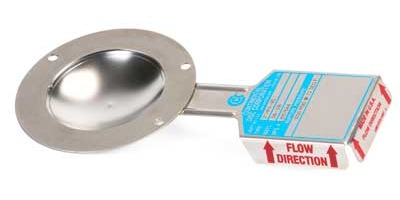
CDC rupture disc
CDC rupture disc.
Continental Disc Corporation is a leading manufacturer of rupture disc (bursting disc) devices for a variety of process industries, including chemical, petrochemical, petroleum refining, pharmaceutical, food and beverage, aerospace, industrial gases, transportation, and other markets worldwide.

They have a very convenient online form to assist in replacement of an existing rupture disc, or to specify a new installation. The form can be found by following this link. The form gives you the option to print it from its online page, or to email the form to Continental Disc sales department for a quotation.

In 2017, CTi Controltech was appointed the exclusive Continental Disc and Groth Equipment representative in Northern California and Nevada.

Pneumatic Damper Drives Superior to Electric Drives on Boiler Dampers

Pneumatic Damper drives
Pneumatic Damper Drives (Rotork)
In flue gas and combustion air applications, rapid response is critical for optimal efficiency, safety, and equipment longevity. Pneumatic vane damper drives don't have gears or motor windings that slow down response or introduce slop. In power plants boiler applications, Rotork Type K damper drives continue to provide a better solution for critical damper applications over electric drives.

Electric Drive
Old Electric Drive
Balanced-draft power generation boilers can experience very serious equipment failures if low pressure conditions exist inside the combustion chamber. Transients in boiler pressure can cause combustion complications leading to irregular heating of steam tubes, and in extreme situations, negative boiler pressure can collapse boiler walls and buckstays. There is a possibility for catastrophic failures (ruined boiler tubes, destroyed  refractory, boiler structural damage) leading to long shutdowns, lost production, and expensive re-construction. Pneumatic damper drives are excellent alternatives to electric drives in these applications because of speed, accuracy, and reliability.

Understanding the catastrophic possibilites, it is extremely important to provide consistent internal operating pressure environment for efficient and manageable combustion. ID (induced draft) fans on combustion boilers play a critical role in maintaining reliable boiler pressure. In turn, the ID fan inlet damper control system that regulates fan induced airflow and pressure need to be accurate, responsive, and reliable to assist in keeping boiler combustion chamber pressure fluctuations in check. Pneumatic vane drives react to signal changes and produce movement instantaneously and repeatably.
Pneumatic drive
New Pneumatic Drive

Rotork Type K PM Series Pedestal-Mount Damper Drives have proven themselves time and time again as the best choice for these applications. Pneumatic vane drives deliver high torque at tested speeds of less than 3 seconds for a full 90-degree stroke. They offer drop-in-place retrofit to the existing damper drive footprint, plus smart positioner technology. The Type K Drives perform quickly and smoothly at full boiler pressure and damper load, and as required, fail to the fully closed position.

The data collected after years of maintenance-free operation, in thousands of successful installations world-wide, is compelling. Pneumatic drives are superior to electric drives on boiler dampers.

Always discuss your damper drive application with an experienced applications engineer for best selection, optimal performance, and maximum safety.

Increased cycle count improves operational efficiency in slurry ore mining operations

slurry pipeline
Slurry pipeline.
Challenge
Long distance slurry pipelines for moving mineral concentrates over various elevations and long distances is often more economical than trucking or rail due to topography constraints and environmental concerns. To capitalize on these investments, the pipe sizes are maximized. Therefore, large-bore dependable valves are vital to the success of the slurry pipelines.

Three months after the main choke and choke loop press letdown stations were commissioned at a large copper-gold-molybdenum mining operation, ongoing repairs were required for all eight competitor valves. Valves in this position were expected to perform for at least 180 cycles without repair. These failures and leakage problems were caused by the valves’ integral seat design, which form a gap between the ball and seat allowing particles to enter the sealing area in the reverse pressure. This problem cost this customer an average of $800,000 to $1M per year in maintenance repairs.

Solution
MOGAS valve
After one year the
MOGAS valve performed 818
successful cycles—over four times the cycle
count required in this application.
Even with MOGAS’ 40-year history of successfully engineering large valves for the slurry transport market, MOGAS proposed to lease a test valve to be placed alongside a series of competitor valves.
In January 2013, a 36-inch, ASME 300 Class model CST-1 valve was installed in the first loop of the control station. In this model’s proven bi-directional seat design, the seat maintains 100% contact with the ball in both normal and reverse pressures. This prevents build-up behind the downstream seat and ensures evacuation of solids around upstream seat during cycling.


Results
Under the same process conditions,
the competitor’s valve underperformed and
required frequent maintenance due to erosion.
One year later during decommission, the MOGAS valve was inspected. It had performed 818 cycles; far more than the 180 cycle count required in this application. The MOGAS valve was then removed and installed outside the loop, in the main choke station replacing the competitor valve, where it further performed 215 cycles for the next two years.

After three years of continuous operation, the MOGAS valve had successfully performed 1033 cycles. On inspection, the ball and seat were in good repair, so only the gasket and packing box were replaced and the valve was put back in to service.

Advantages to installing a MOGAS valve:
  • No downtime due to increased cycle time and continuous operation 
  • No repair or maintenance of ball and seat
  • Increased cycle count and greater revenue
For more information, contact CTi Controltech by calling 925-208-4250 or visit https://cti-ct.com.

Reprinted with permission from MOGAS.

Welcome to CTi Controltech

Since 1976 CTi Controltech has represented the leading process control and combustion manufacturers.  These products, together with our engineering capabilities, give CTi customers high quality solutions to the most difficult industrial applications.

CTi is focused on the top quality manufacturers in process control, valves, instrumentation, and combustion. Over the past three decades CTi has continually added and upgraded the quality of companies it represents.

Our staff of engineers and technicians is well versed with all our products and are ready to help you with your most demanding applications.

Rupture Disc Assemblies Designed to Protect Tanks Against Implosion or Overpressure Conditions

CAL-VAC POS-A-SET
CAL-VAC and POS-A-SET
Continental Disc Corporation's CAL-VAC® and POS-A-SET® Rupture Disc Assemblies are highly accurate, double acting pressure relief devices designed to protect processing and storage tanks against implosion or overpressure conditions that can occur in:
  • Positive Pressure - overfill, external fire, steam regulator failure 
  • Vacuum Relief  - liquid pump out, insufficient flow through sanitary vent filer, flash vacuum due to CIP cool rinse, primary vent malfunctions, blanket gas or air regulator failure
Both designs relieve pressure settings starting as low as 1 InWC (inches water column) differential. The difference in the CAL-VAC Rupture Disc and POS-A-SET Rupture Disc is the orientation of the components to meet the relieving requirements. The CAL-VAC Rupture Disc relieves ultra low pressure in the vacuum (negative) pressure direction, while the POS-A-SET Rupture Disc relieves ultra low pressure in the positive pressure direction.

Fluid Processing - Plug Valves

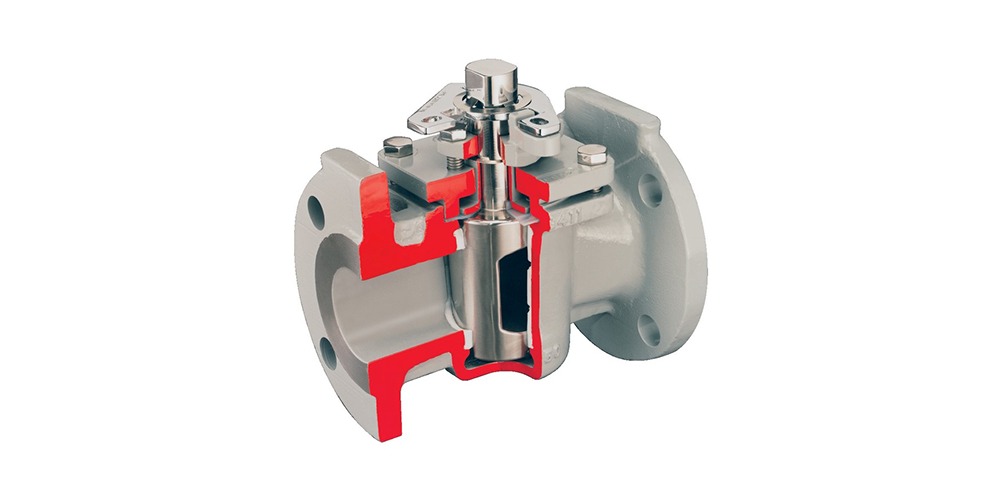
plug valve cutaway view
Plug valve cutaway view
Image courtesy Flowserve - Durco
Fluid process control operations commonly employ pumps, piping, tanks and valves as the means of transporting, containing and controlling the fluid movement through a system.

Valves, of which there are many types, provide control over the flow rate, direction and routing of fluids in a processing operation. Flow can be started, stopped or modulated between zero and full rate using a properly sized and configured valve. Some valves enable media flow to be diverted to a selection of outlets, in lieu of a single inlet and outlet pair. Specialized valves regulate inlet or outlet pressure, or prevent fluid flow from going in an undesirable direction. All of these capabilities are packaged into differing valve product offerings that present a very large selection array to a process designer or engineer.

Industrial flow control valve types are generally classified according to the structure or arrangement contained within the valve body that provides obstruction to fluid flow. Some of the common types are ball, butterfly, gate, globe, and plug. Surely, there are more valve types, and this article is not intended to list them all. Some of our previous blogs have discussed selection considerations for gate, ball and butterfly valves. This article will focus on one of the oldest valve types, the plug valve.

Plug valves, like ball and butterfly valves, span from fully open to fully closed positions with a shaft rotation of 90 degrees. The “plug” in a plug valve is installed in the flow path within the valve body and rotated by means of a stem or shaft extending to the exterior of the body. Plugs are often tapered toward the bottom and are fitted to a seating surface in the valve body cavity that prevents fluid from bypassing the plug. An opening through the plug, the port, can be shaped to provide particular flow characteristics. There are numerous variants of the basic plug valve which may make it suitable for particular applications. One common variant is the lined or sleeved plug valve, with an insert or interior lining of material that creates an isolating barrier between the valve body and the media. This allows use of less expensive materials for the body construction that may be otherwise subject to corrosion by exposure to aggressive media.

Plug valves can be selected for a number of attributes.
  • 90 degree rotation from open to closed provides fast operation.
  • With proper configuration, can be well suited for frequent operation.
  • Availability of corrosion resistant liner may provide comparative cost savings because valve body can be constructed of less expensive material.
  • Design is simple and employs a low parts count.
  • Valve can be serviced in place.
  • Generally, low resistance to flow when fully open.
  • Reliable leak-tight service due to tapered plug wedging action, replaceable sleeve, and injection of lubricant in some variants.
Potential issues of concern for plug valve application include a short list of items.
  • Higher friction in the plug closure mechanism may require comparatively higher operating torque than other valve types.
  • Without a specially designed plug, generally not well suited for throttling applications.
  • Rapid shutoff delivered by plug design may not be suitable for some applications where hammering may occur.
Share your fluid control application challenges with a valve and automation specialist. Leverage your own knowledge and experience with their product application expertise to develop an effective solution.